Dear Class,
Here are the instructions for accessing Raph Koster's "A Theory of Fun" on Homer:
First, try this link: http://site.ebrary.com.libproxy.usc.edu/lib/uscisd/docDetail.action?docID=10080000
If that doesn't work, follow these instructions: Go to this link: http://library.usc.edu/uhtbin/cgisirsi/glR7ItlXBC/DOHENY/126361682/38/1/X/BLASTOFF
When there, enter "Theory of Fun" into the search box and be sure to click the "Title" button so that Homer searches its records for the books title
Once the search is done, Raph Koster's Theory of Fun will be the one at the top of the list. Click on its link
What shows up is an electronic card catalog card. There will be a single, long link at the bottom of the card. Click on this to access the online copy.
And that's it.
Please read through Chapter 5 for this coming Tuesday's lecture.
- Prof. Colon
Thursday, August 25, 2011

Tuesday, August 23, 2011
The Tech Wave

Historically, the record is mixed. In some regards, everybody still casually refers to broadcast monitors as TeleVisions, (TVs) regardless whether the technology is using a cathode ray tube (CRT), a plasma screen or an liquid crystal display (LCD). The same is not true of audio devices. You can identify the geriatric technophiles in the room by whether they listen to LPs, cassettes, CDs or their iPod. I'm pretty sure nobody says, " Check out the new tune on my MP3 player". And even if some folks did, it would fall out of fashion soon enough. After all, MP3 as a format will one day be supplanted by something either superior or with better compression.
By it's very technological nature, the video games industry must undergo change. Technology never remains static, but rather flows, like a wave, barreling in an unstoppable fashion toward new shores. Companies like Nintendo have always been able to adapt. We will be examining many companies during class this semester, so as you read about them, remember that the ability to adapt to changes in technological waves has less to do with expertise, and more with innovation and core philosophies.
Wednesday, January 19, 2011

Wednesday, December 8, 2010
Games are formal structures
A student recently asked, "How is a game a formal structure?" Great question.
First of all, let's look at the definition of a system:
According to M. Alan Kazlev [1], a formal system is [a construct] in which statements can be constructed and manipulated with logical rules. So at the core, a game is basically a logical construct. Everything else is superficial, that is to say, the narrative, characters, music and art is all window dressing placed on top of the construct for aesthetic reasons.
Here's an example from Raph Koster of how a story tacked onto a formal game structure can have profound ethical implications:
[1] http://www.orionsarm.com/eg-topic/45b2b9be57dea
[2] "A Theory of Fun for Game Design" Raph Koster, 2004 http://www.theoryoffun.com/
First of all, let's look at the definition of a system:
sys·tem, n.All of the definitions in red are directly applicable to games. Now, let's examine what makes a formal system.
1. A group of interacting, interrelated, or interdependent elements forming a complex whole.2. A functionally related group of elements, especially:a. The human body regarded as a functional physiological unit.b. An organism as a whole, especially with regard to its vital processes or functions.c. A group of physiologically or anatomically complementary organs or parts: the nervous system; the skeletal system.d. A group of interacting mechanical or electrical components.e. A network of structures and channels, as for communication, travel, or distribution.f. A network of related computer software, hardware, and data transmission devices.3. An organized set of interrelated ideas or principles.4. A social, economic, or political organizational form.5. A naturally occurring group of objects or phenomena: the solar system.6. A set of objects or phenomena grouped together for classification or analysis.7. A condition of harmonious, orderly interaction.
8. An organized and coordinated method; a procedure.
9. The prevailing social order; the establishment.
According to M. Alan Kazlev [1], a formal system is [a construct] in which statements can be constructed and manipulated with logical rules. So at the core, a game is basically a logical construct. Everything else is superficial, that is to say, the narrative, characters, music and art is all window dressing placed on top of the construct for aesthetic reasons.
Here's an example from Raph Koster of how a story tacked onto a formal game structure can have profound ethical implications:
The bare mechanics of the game do not determine its semantic freight. Let’s try a thought experiment. Let’s picture a mass murder game wherein there is a gas chamber shaped like a well. You the player are dropping innocent victims down into the gas chamber, and they come in all shapes and sizes. There are old ones and young ones, fat ones and tall ones. As they fall to the bottom, they grab onto each other and try to form human pyramids to get to the top of the well. Should they manage to get out, the game is over and you lose. But if you pack them in tightly enough, the ones on the bottom succumb to the gas and die.

I do not want to play this game. Do you? Yet it is Tetris. You could have well-proven, stellar game design mechanics applied toward a repugnant premise. To those who say the art of the game is purely that of the mechanics, I say that film is not solely the art of cinematography or scriptwriting or directing or acting. The art of the game is the whole….
…All artistic media have influence, and free will also has a say in what people say and do. Games right now seem to have a very narrow palette of expression. But let them grow….It is not surprising that we wonder whether games or TV or movies have a social responsibility–once upon a time we asked the same thing about poetry. Nobody really ever agreed on an answer.
The constructive thing to do is to push the boundary gently so that it doesn’t backfire. That’s how we got Lolita and Catcher in the Rye and how we got Apocalypse Now. As a medium, we have to earn the right to be taken seriously. [2]
[1] http://www.orionsarm.com/eg-topic/45b2b9be57dea
[2] "A Theory of Fun for Game Design" Raph Koster, 2004 http://www.theoryoffun.com/
Wednesday, December 9, 2009
Here's a great video submitted by our TA Jesse Busch about the history of Nintendo's Mario. Accroding to Wikipedia:
Mario (マリオ) is a fictional character in his eponymous vi
deo game series, created by video game designer Shigeru Miyamoto. Serving as Nintendo's mascot and the main protagonist of the series, Mario has appeared in over 200 video games since his creation. Though originally only appearing in platform games, starting with Donkey Kong, Mario currently appears in video game genres such as racing, puzzle, role-playing, fighting, and sports.
Mario is depicted as a short, pudgy, Italian plumber who lives in the Mushroom Kingdom. He repeatedly stops Bowser's numerous plans to kidnap Princess Peach and subjugate the Mushroom Kingdom. He also has other enemies and rivals, including Donkey Kong and Wario. Since 1995, Mario has been voiced by Charles Martinet.
As Nintendo's mascot, Mario is one of the most famous characters in video game history, and his image is commonly associated with video games. Mario games, as a whole, have sold more than 210 million units, making the Mario series the best-selling video game series of all time. Outside platform games, he has appeared in video games of other genres, including the Mario Kart racing series, sports games, such as the Mario Tennis and Mario Golf series, and role-playing games such as Paper Mario. He has also inspired television shows, film, comics, and a line of licensed merchandise.

Friday, December 4, 2009
Breaking into the biz

Recently a student of mine was asking, "How do I break into the Games Biz?"
The answer varies depending if you are an artist, designer or engineer. Below are my recommendations to you. If you can address all of these you will greatly increase your chances of breaking into the games biz:
- Create a website to show your work. Do it on Blogspot.com. It's ridiculously easy. Checkout these examples:
- Artist portfolios
- http://echoform.blogspot.com/
- http://johnwatkiss.blogspot.
com/ - http://artofach.blogspot.com/
- Game Designer portfolios
- http://www.bhird.com/
- Programmer portfolios
- http://sparthconstruct.
blogspot.com/ - http://database-programmer.blogspot.com/
- http://revit-programmer.blogspot.com/
- Be sure your interview materials are always ready to go at a moment's notice:
- Your business cards and printed portfolio match your blog theme. Dress for success and be punctual (early). This demonstrates you are dependable and detail oriented.
- Your blog address is included on your business cards.
- Your printed portfolio and cd samples of code are up to date for interviewing with cavemen who haven't heard of the internet.
- Frequently visit the listings at the sites below for jobs. Consider taking a job as a Quality Assurance tester. A lot of artists, designers and engineers I know broke into the biz as a QA tester and got promoted:
- http://www.creativeheads.net/
- http://www.gamasutra.com/jobs/
- http://www.gamejobs.com/
- http://www.hollywoodentertainmentjobs.com/
- http://www.simplyhired.com/a/
jobs/list/q-compositor - http://www.media-match.com/
usa/jobsboard.php - Get experience doing freelance gigs. Craigslist.com is your friend.
Video Games Sales
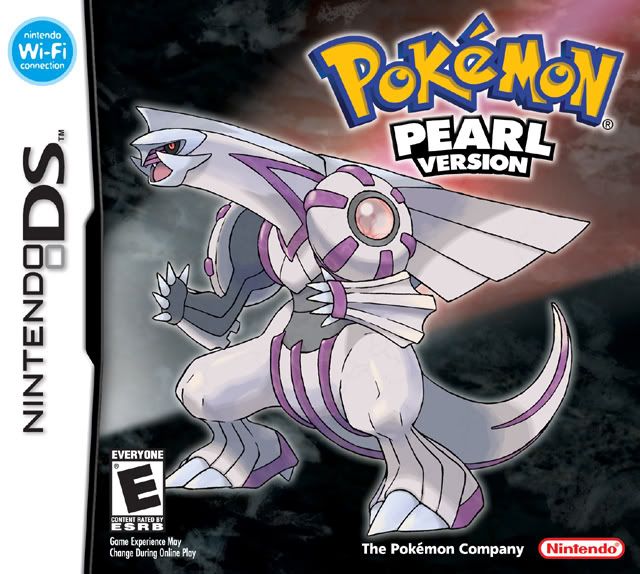
What makes a video game franchise successful? Check out this article about the recent release of Pokémon Diamond/Pearl for the Nintendo DS. Thanks for the submission Cydney!
Subscribe to:
Posts (Atom)

