Thursday, August 29, 2013

M.E.G.A. Welcome Event!

Please join us for free food & drinks to welcome future game makers at USC!

WHAT: Introduce USC Games, MEGA, 
WHO: MEGA, students from USC Games
WHEN: Wednesday 6-8:30
WHERE: SCI, the new cinema building across from Lyon Center

MEGA is the main student club for making games. The Makers of Entertaining Games Association (MEGA) is a student run organization which strives to promote and facilitate the art of game creation within the University of Southern California. We are a community of students from many disciplines who meet at open weekly meetings, in which members share information on current projects, discuss relevant news, and host guest speakers from all corners of the industry.

Thursday, August 15, 2013


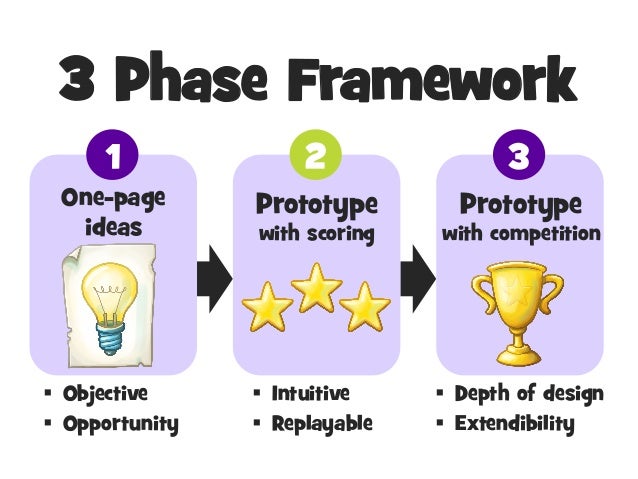
How do you know if your game concept has hit potential? Here is a great talk from Casual Connect 2013 on this subject on “Finding the needle in the haystack”.

There are lots of talks about the process of prototyping, but no hints on how to evaluate them to make the decisions. In this talk Antti Hattara, Head of Studio at Wooga, will tell how to evaluate prototypes and recognize the ones with great potential from the rest Antti will talk about the mobile developer’s creative and agile approach to finding those needles in a haystack and how good projects are put to rest and great ones given that all-important green light.

Video: http://www.wooga.com/2013/08/ccsf13/
Slides: http://www.slideshare.net/wooga/2013-0724-casualconnectneedleinhaystackslideshare-25024393?smtNoRedir=1

Wednesday, May 22, 2013

51 things...

Often, somebody says something so succinctly, it's difficult to improve upon it. This post on 51 things every game student should know is one of them. Enjoy!

Saturday, September 8, 2012

Is your Game Sticky?

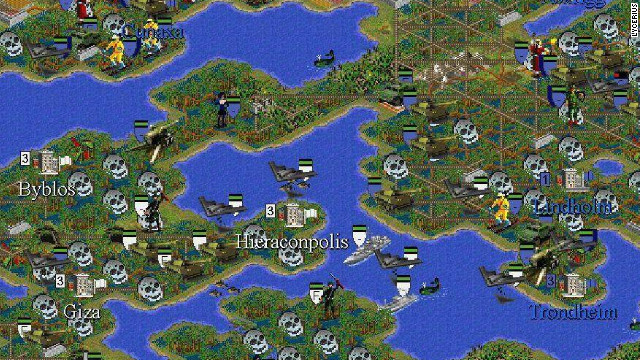
My students recently mentioned an article about a man who played the same game of civilization for 10 years. Talk about addicting gameplay! This brings me to the question, what makes a game sticky? The answer seems to vary depending upon the genre.

For Social Games, stickiness is vital since the revenue model depends upon users returning frequently. Simply put, whenever a user goes back and plays, the more involved they are. This increases the opportunities to monetize, since a user who plays every day is much more likely to get to this point where they open their wallet, compared with those who visit once or twice a month never comes back. The key stickiness factor for social games, aside from being a great game, is the game's ability access to their friends via Social Media. Yet with such a reliance upon social media, the challenge for social games going forward remains how to deal with the constant changes in services of social media as has been seen in the myriad of Facebook updates to user terms and services.

For MMOs, stickiness boils down to community. The initial draw to a game largely revolves around the excitement and buzz of something new. Yet after the novelty of the game wears off, the user is no longer playing the game so much because they still find it fun, but simply because the user is more interested being a part of their circle of friends more than completing quests.

Of course, all sticky games have one thing in common: they are great games. According to Raph Koster, the mark of a truly good game is one that teaches us everything it possibly can before we grow tired of playing. This suggests that after 10 years of trying to bring peace to the world in the face of opposition from war-minded AI opponents, the game still had something to teach. So when designing for your game, remember that regardless of the platform, the first key to success begins with having something compelling to share with your audience.

Thursday, August 30, 2012

Scholarship - Grace Hopper Celebration of Women in Computing 2012


USC is sponsoring *full scholarships* for several USC undergraduate, Masters, and PhD students to attend this conference.  We sent nineteen students last year (fully or partially funded by USC), and we expect to be able to send at least sixteen this year.  Students selected to attend will receive financial support sufficient to cover travel, conference fees, food and lodging.  This is a great opportunity for getting valuable career advice, networking with other women, and finding out more about the current technical contributions of women in the field, whether you are industry- or academia-bound.
This year the Viterbi School is sponsoring a booth at the conference.  Scholarship recipients will be expected to help staff the booth for four hours, as well as answer a survey about their experience at the conference after they return.
APPLICATION PROCESS:  if you are interested in attending and would like to be considered for a scholarship please send us your resume and a short paragraph on why you'd like to participate.  If you already have partial funding from another source(s), please mention the details of that in your paragraph, because we will take that into consideration (partial support enables us to send more students from USC overall).  Send your application to
            Claire Bono -- bono@usc.edu
                 by NO LATER THAN Tuesday Sept. 4, 2012
Be sure to include your NAME, USC ID, MAJOR, and DEGREE you are working towards (e.g., BS, MS, PhD) in your message.

The Grace Hopper Celebration of Women in Computing is a series of conferences designed to bring the research and career interests of women in computing to the forefront. Presenters are leaders in their respective fields, representing industrial, academic and government communities. Leading researchers present their current work, while special sessions focus on the role of women in today's technology fields, including computer science, information technology, research and engineering.
Past Grace Hopper Celebrations have resulted in collaborative proposals, networking, mentoring, and increased visibility for the contributions of women in computing.
 
For more information please follow this link: http://gracehopper.org/
 

Wednesday, August 29, 2012

Understanding Pac-Man Ghost Behavior

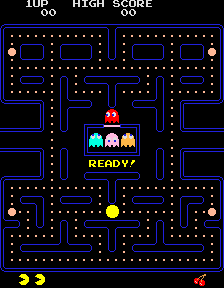
The enemies in Pac-Man are known variously as "ghosts," "goblins," and "monsters".  Despite the seemingly random nature of the enemies, their movements are strictly deterministic, which players have used to their advantage. In an interview, creator Toru Iwatani stated that he had designed each enemy with its own distinct personality in order to keep the game from becoming impossibly difficult or boring to play. More recently, Iwatani described the enemy behaviors in more detail at the 2011 Game Developers Conference. He stated that the red enemy chases Pac-Man, and the pink and blue enemies try to position themselves in front of Pac-Man's mouth. While he claimed that the orange enemy's behavior is random, a careful analysis of the game's code reveals that it actually chases Pac-Man most of the time, but also moves toward the lower-left corner of the maze when it gets too close to Pac-Man.


Thursday, October 6, 2011

Who was Steve Jobs?

When contemplating Steve Job's contributions to the video game industry, we often think about his legacy at Apple, clearly his greatest achievement. But from a historical perspective, we should consider the wiry high school dropout who talked his way into a game designer job at Atari as employee #40. From the very beginning, Steve always marched to his own drumbeat, and it was this stubborn insistence and acute aesthetic that made Steve such a powerful visionary.

The world has seen many visionaries, but none quite like Steve Jobs. For that reason, I present the following brief history of his early contributions in his memory. He will be missed.